
A batch of turmeric capsules recalled after reports of liver damage, a supplement for athletes contaminated with a doping substance: these situations occur in the French market. Ensuring the quality and safety of dietary supplements is not just about ticking regulatory boxes. We must understand where the real points of fragility lie, from ingredient selection to post-market monitoring.
Plant Ingredients and Nutrivigilance: The Concrete Risks to Know
Plants are often associated with a form of natural safety. Nutrivigilance data show the opposite for some of them. Turmeric has been linked to liver damage, licorice to a risk of hypertension, and St. John’s Wort to interactions with certain contraceptives and anticoagulants.
These reports do not concern adulterated products. They target dietary supplements formulated with authorized ingredients, but whose effects depend on the dose, the galenic form, and the health status of the consumer. A manufacturer that wants to guarantee the quality of products on Cydlab integrates these parameters from the formulation phase, not once the product is on the shelf.
The French law of May 10, 2024, has also strengthened protection against pseudo-therapeutic advice. It penalizes the act of encouraging a sick person to abandon treatment in favor of supplements presented as alternatives. This text directly concerns overly aggressive commercial claims around vitamins and plant extracts.
Controls Before Market Release: What the Declaration Does Not Guarantee
In France, a manufacturer or importer must declare their dietary supplement before marketing it. One might think that this step filters out risky products. The declaration does not equate to authorization or validation of effectiveness. It registers the existence of the product, without prior evaluation comparable to that of a medication.
Control then occurs, either by sampling or upon reporting. The DGCCRF services check the compliance of products already in circulation, not before their arrival in stores or online. This post-market surveillance logic places direct responsibility on the manufacturer.
What the Manufacturer Must Prove Themselves
Compliance rests on several pillars that the manufacturer documents and retains:
- Complete traceability of ingredients, from the raw material supplier to the packaging of the finished product
- Compliance analyses on each batch (identification of active ingredients, search for contaminants, verification of declared contents on labeling)
- Adherence to positive lists of authorized ingredients, particularly for vitamins, minerals, and plants, with the chemical forms and maximum doses set by European regulations
- Compliant labeling that mentions composition, usage precautions, recommended daily portion, and the warning that the product does not replace a varied diet
Without these elements, a product can end up on the shelf while presenting non-conformities that only a subsequent inspection will detect.
NF EN 17444 Standard for Supplements Intended for Athletes
Athletes subject to anti-doping controls face a particular risk with dietary supplements. Cross-contamination during production is enough to trigger a positive test. The European standard NF EN 17444 specifically addresses this risk, covering supplier qualification, traceability, and analysis of the finished product to detect potential doping substances.
This standard succeeded NF V94-001. It remains voluntary: no text obliges a manufacturer to comply with it. Feedback varies on this point; some laboratories consider it a minimum, while others find it costly to implement for small batches.
For a sporting consumer, the presence of this certification on a product is a concrete signal. It does not guarantee zero risk, but it certifies that the manufacturer has established a control protocol focused on substances prohibited by sports authorities.
Labeling and Health Claims: Reading Beyond Marketing
Health claims on dietary supplements are regulated at the European level. A manufacturer cannot write whatever they want on their packaging. Authorized mentions are listed in a European register, and any unvalidated claim constitutes an infringement.
On the ground, it is observed that some formulations play on ambiguity. A product may state “contributes to the normal functioning of the immune system” (an authorized claim for vitamin C) while implying, through its trade name or visuals, that it protects against specific pathologies. The nuance is subtle, but it changes everything for the consumer.
Points to Check on the Packaging
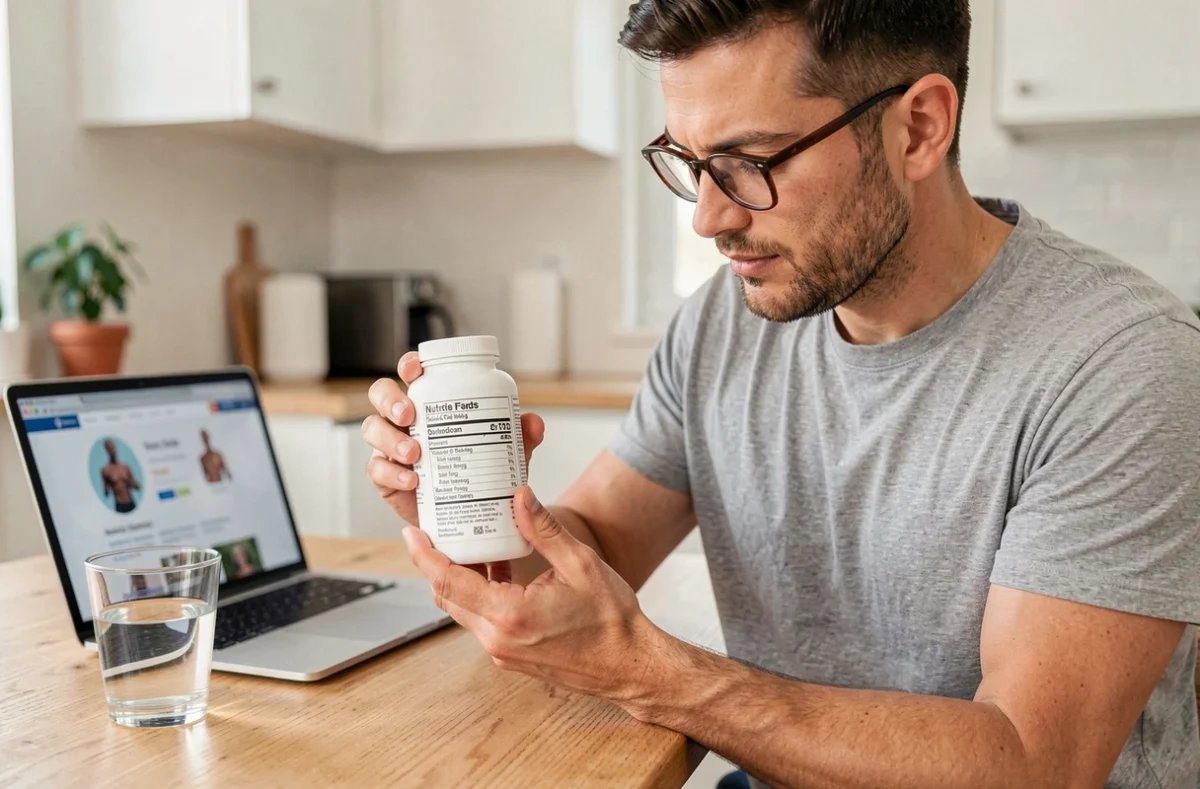
Before purchasing, one can check several elements directly on the label:
- The complete list of ingredients, including additives and excipients (anti-caking agents, colorants, coating agents)
- The mandatory mention “dietary supplement,” which distinguishes the product from a medication
- The contact details of the market authorization holder, which allow verification of the actual existence of the company
A complete and transparent label remains the first quality filter accessible without special equipment or expertise. When this information is missing or unclear, it is a warning signal, regardless of the price or reputation of the brand.
The safety of a dietary supplement is built at every stage: choice of raw materials, control of production, batch analyses, rigorous labeling, and post-market surveillance. None of these steps compensates for the absence of another. It is this complete chain, and not a mere administrative declaration, that distinguishes a reliable product from a risky one.