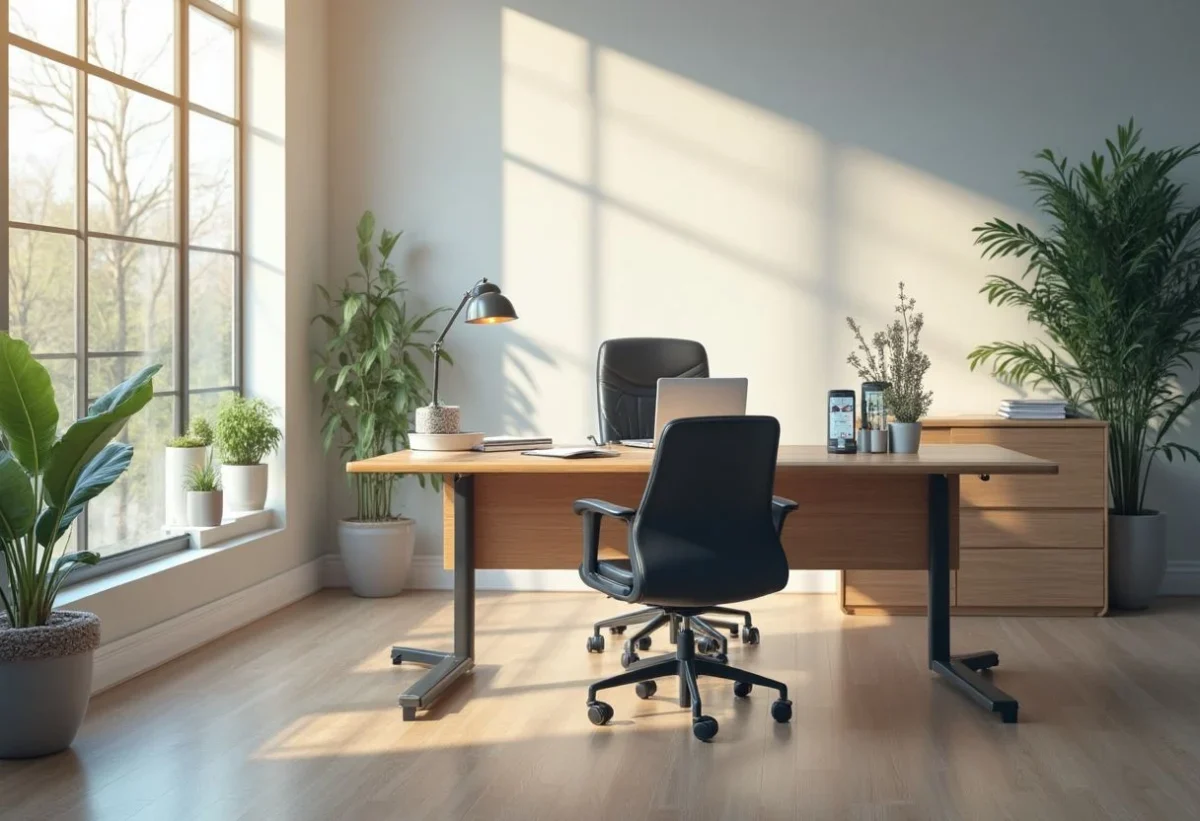
In the modern world, where we spend a large part of our professional life sitting in front of a screen, the choice of office furniture becomes a major issue for our comfort and productivity. Office furniture is not just about choosing a simple desk or chair; it is a delicate combination of aesthetics, functionality, and ergonomics. The right layout can transform a monotonous workspace into an inspiring environment conducive to creativity. Indeed, furniture contributes not only to the arrangement of space but also to our daily well-being.
The role of ergonomics in office furniture
Ergonomics in the field of office furniture plays a fundamental role in ensuring the physical well-being of workers.
Ergonomic seats are designed to support the body’s natural posture, thereby minimizing muscle tension and reducing the risk of chronic pain. A good chair should offer adequate lumbar support, adjustable in height and tilt.
Height-adjustable desks allow users to alternate between sitting and standing positions. This promotes better blood circulation and prevents complications related to a sedentary lifestyle.
Accessories such as footrests, adjustable monitor stands, and ergonomic mouse pads complement the setup for optimal comfort.
Aesthetics and design: when furniture becomes a visual asset
The aesthetics of office furniture should not be overlooked, as it influences the atmosphere and motivation at work. A well-designed desk can stimulate creativity and improve communication within the team.
- Natural materials such as wood and leather bring a touch of warmth and elegance.
- Neutral or pastel colors promote a calming atmosphere, while bright shades can energize the space.
- Minimalist design, with clean lines and a functional layout, contributes to an orderly and distraction-free work environment.
Functionality and modularity: adapting furniture to needs
Functionality is at the heart of concerns when choosing office furniture. It must not only meet current needs but also allow for some flexibility to adapt to changes.
- Modular furniture, such as shelves or cabinets, allows for easy adaptation to evolving storage needs.
- Integrated wiring systems help maintain a clean and organized workspace.
- Transformable furniture, such as folding tables or extendable desks, offers a practical solution for limited spaces.
Environmental impact and sustainability of office furniture
The environmental impact of office furniture is an increasingly important factor for companies concerned about their ecological footprint.
Eco-friendly materials, such as bamboo or recycled plastics, are favored to reduce environmental impact. Durability is also an important criterion, with a preference for robust, quality furniture that reduces the need for frequent replacement.
Eco-certifications, such as the FSC label for wood, ensure responsible management of natural resources. Choosing local suppliers also helps reduce the carbon footprint associated with transportation.
Choosing suitable office furniture is a process that goes beyond mere functionality. It is about creating a harmonious environment where ergonomics, aesthetics, functionality, and sustainability come together to optimize well-being and efficiency at work. Every element, from the chair to the desk, including accessories, must be carefully chosen to meet individual and collective needs.