
Yawning during prayer affects practitioners of all faiths, often repeatedly and without apparent connection to fatigue. The phenomenon is puzzling because it occurs at a moment meant to engage attention, not to induce sleep. Several interpretations coexist to explain it, ranging from neurophysiology to spiritual interpretations, with none asserting itself as definitive.
Parasympathetic Activation and Brain Thermoregulation During Prayer
Yawning is often reduced to a sign of fatigue or boredom. However, recent work in neuroscience associates it with modulation of alertness and brain temperature. The brain yawns to cool down and adjust its level of vigilance, not just due to lack of sleep.
This point changes the understanding of the phenomenon. Prayer, whether recited, silent, or contemplative, produces a measurable physiological slowdown. Clinical studies show that repeated devotional practices, whether Christian, Muslim, or Buddhist, lead to a decrease in heart rate and parasympathetic activation. The body shifts into rest mode, breathing slows, and brain temperature changes.
Yawning then appears as a mechanical response to this physiological shift. It does not signal disinterest but rather an internal state change that the practitioner may not always consciously perceive. As detailed in Klottra’s explanations, this mechanism applies to both solitary and collective prayer.
Yawning and Prayer in Islamic Tradition: Between Hadith and Scholars’ Interpretation
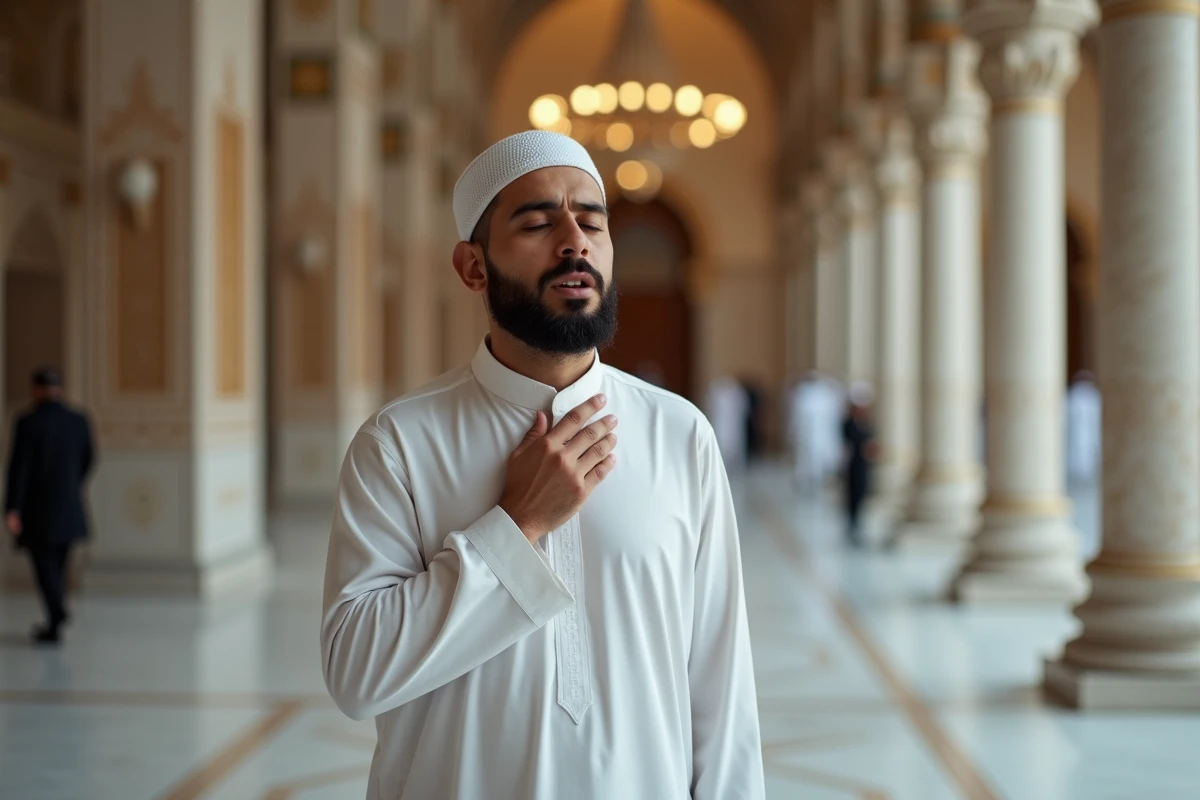
In the Islamic context, yawning during salat is addressed in specific texts. A hadith reported by Al-Bukhari attributes yawning to Satan and prescribes suppressing it as much as possible by covering the mouth with the hand. This hadith applies during and outside of prayer, but scholars consider that yawning during prayer is more detestable than at other times.
The dominant interpretation links yawning to a lack of concentration (khushû’). The classical commentary on Sahîh Al-Bukhârî by Ibn Hadjar al-‘Asqalânî specifies that yawning occurs in a state of relaxation and laziness. This reading places the responsibility on the practitioner, who must strengthen their mental presence.
In contrast, some contemporary commentators nuance this position by incorporating the physiological dimension. Yawning is not systematically a sign of spiritual negligence. A believer praying at night after a day of work yawns due to real fatigue, not a lack of faith. The boundary between physical cause and spiritual cause remains blurred, and practitioners themselves interpret it very differently depending on their context.
Emotional Release or Spiritual Battle: Christian Interpretation of Yawning in Prayer
Christianity does not have a canonical text equivalent to the hadith on yawning. Interpretations vary according to different movements.
In charismatic movements and some evangelical deliverance ministries, a reading has developed since the 2010s. Yawning during prayer is perceived as a sign of emotional tension release or liberation, rather than as a demonic distraction. Documented testimonies on ministry channels and websites between 2015 and 2024 describe the phenomenon as a physical release accompanying inner work.
This interpretation coexists with an older and stricter view that equates yawning with spiritual interference intended to distract the believer from communion with God. The Reddit thread r/Christianity illustrates this coexistence well: practitioners report uncontrollable yawning during prayer or mass, without prior fatigue, and responses oscillate between physiological explanation and spiritual framework.
No unified doctrinal position resolves the debate in the Christian world. The absence of normative text allows each community to interpret the phenomenon according to its own theology of the body and prayer.
What Neuroscience and Spirituality Share Here
Both frameworks converge on one point: yawning during prayer accompanies a change in state of consciousness. For neuroscience, it is a transition between active alertness and parasympathetic activation. For spiritual traditions, it is the threshold of a deeper state of contemplation or a resistance to entering it.
Neuroscience research from the 2010s to 2020s also links prayer to certain contemplative practices studied in secular contexts, such as meditation. The activated brain mechanisms are comparable, and yawning occurs with a similar frequency.
Reducing Yawning During Prayer: Practical Suggestions
Addressing yawning in the context of prayer requires acknowledging that it has physical components, not just spiritual ones. Several practical adjustments are documented by religious traditions and are consistent with the identified physiological mechanisms.
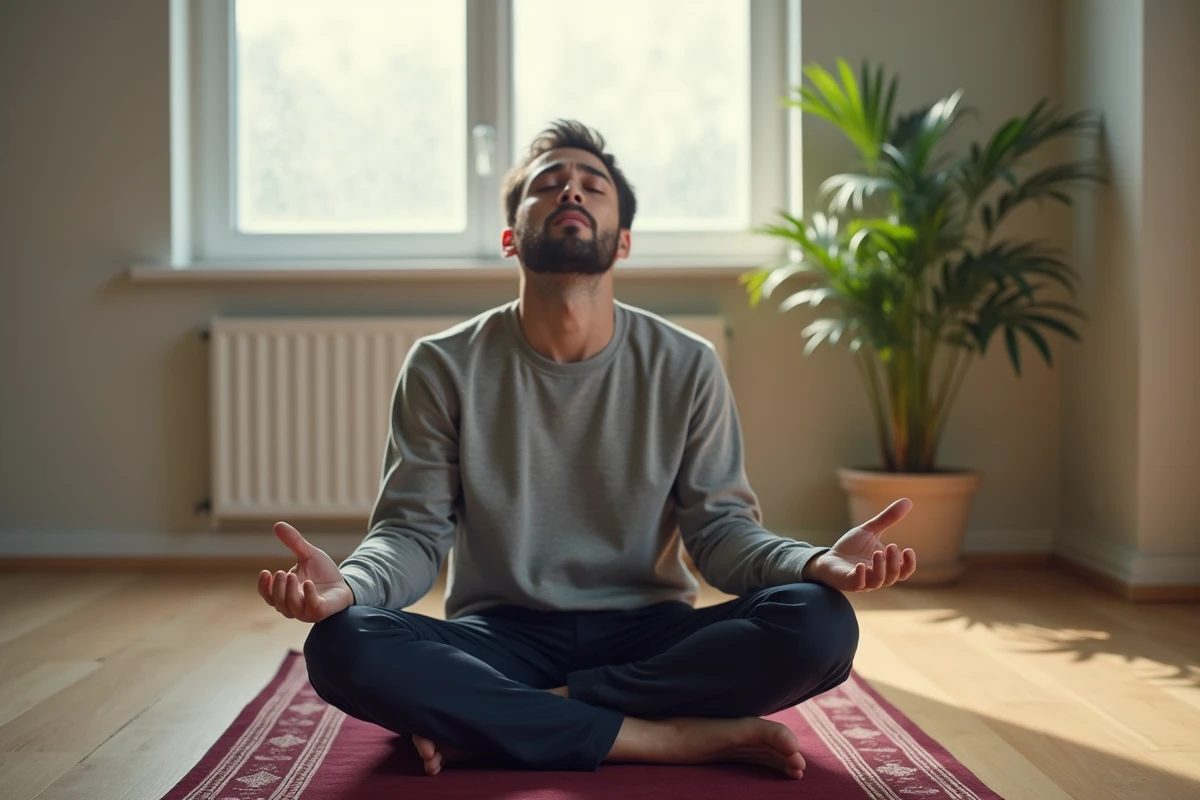
- Breathe deeply before starting prayer. A few slow, deep breaths increase oxygen intake and regulate brain temperature, two factors linked to the onset of yawning.
- Pray at a time when alertness is naturally higher. Avoiding slots just after a heavy meal or at the end of the day reduces the likelihood of strong parasympathetic activation.
- Vary posture or type of prayer. Vocal or movement-based prayer (walking, prostrations) maintains a higher level of bodily alertness than prolonged seated and silent prayer.
- Do not fight against yawning with guilt. Islamic tradition recommends covering the mouth and suppressing yawning but does not call for excessive self-blame. On the Christian side, the “liberation” reading even invites welcoming it.
The most realistic approach combines physiological awareness and spiritual intention. A rested, well-hydrated practitioner attentive to their posture will yawn less, regardless of their prayer tradition. Persistent yawning despite these adjustments deserves to be observed without judgment, as a signal from the body accompanying prayer rather than sabotaging it.