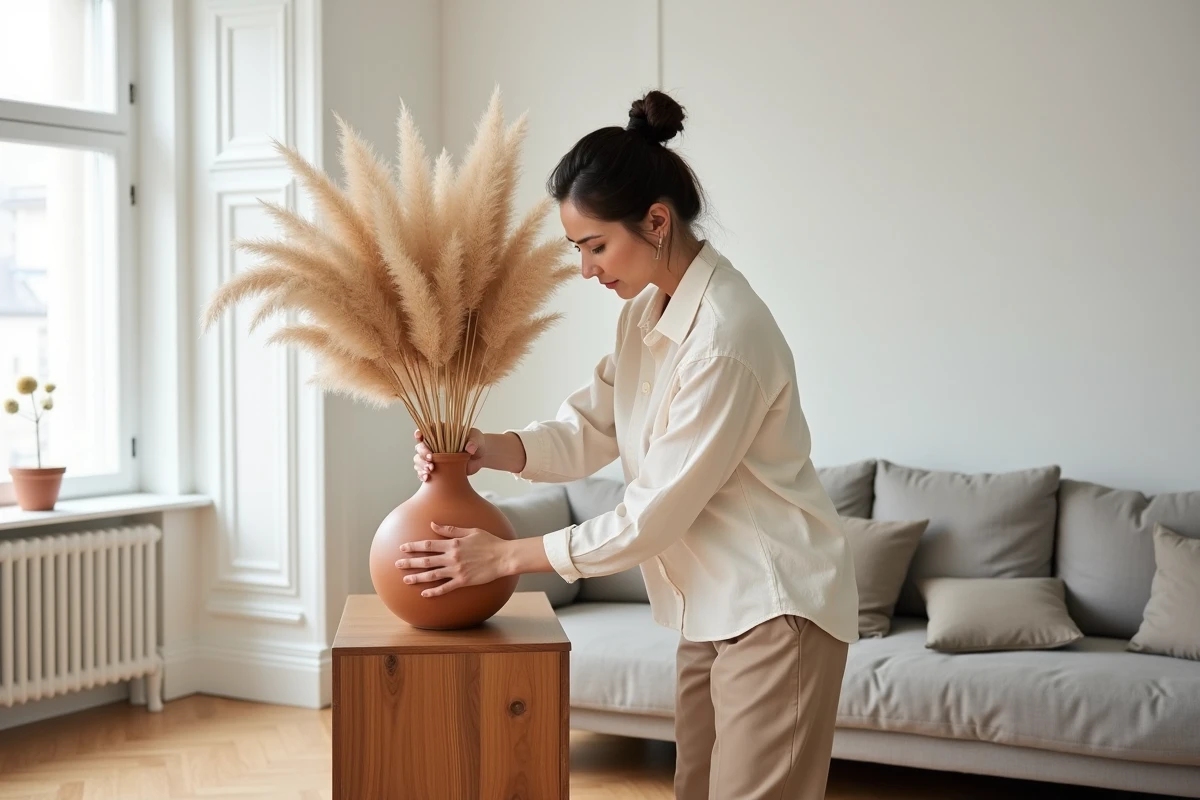
The transformation of an interior relies less on budget than on mastery of proportions, materials, and light circulation. We have observed a clear shift over several seasons: trendy decoration projects focus more on enhancing what already exists than on the mass purchase of new pieces. The regulatory framework follows this direction, as the AGEC law now imposes increased obligations on furniture stakeholders regarding take-back and reuse.
Choice of decorative materials: prioritize sensory coherence
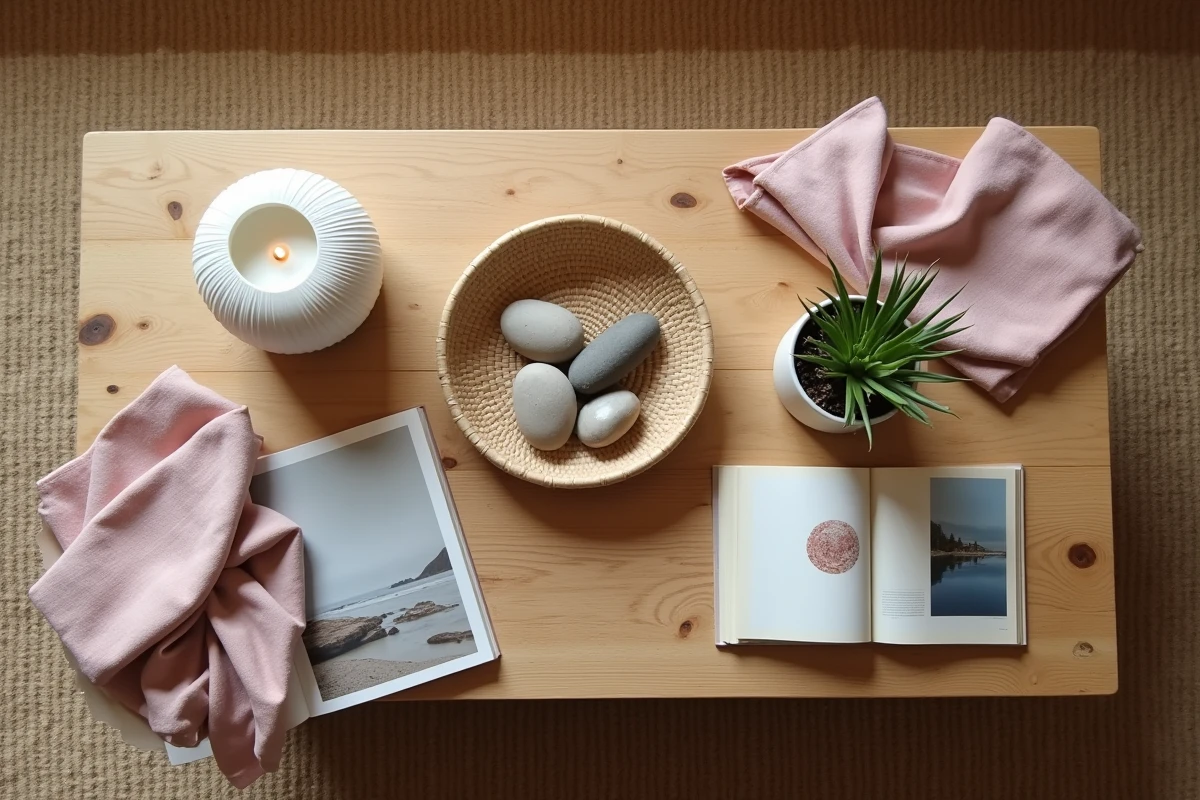
A successful interior is first read by touch, not just by sight. The coherence of textures takes precedence over the accumulation of trends. Pairing washed linen with raw wood works because both materials share a comparable roughness. Applying velvet over polished concrete creates a tension that can serve a specific purpose, but becomes tiring if repeated in every room.
We recommend limiting the palette to three families of materials per space. Wood, textile, and a mineral material (stoneware, terrazzo, reconstituted stone) are sufficient to structure an entire room. Adding metal or glass introduces an accent, not a fourth base.
To delve deeper into this material selection logic, the solutions offered by iDéco Maison allow for visualizing coherent combinations before placing an order.
Upcycling takes this reflection further. Sanding and staining a vintage piece of furniture allows for precise control over the wood’s finish, whereas an industrial piece imposes standardized veneer. Brands like Ikea or Leroy Merlin now offer take-back and resale services for second-hand furniture, making it easier to rotate pieces without extra cost.
Color temperature and lighting: adjustments that decor articles ignore
Lighting makes or breaks an ambiance, regardless of the furniture in place. Most interiors suffer from overly uniform lighting: a central ceiling fixture with a cool temperature that flattens volumes and washes out wall colors.
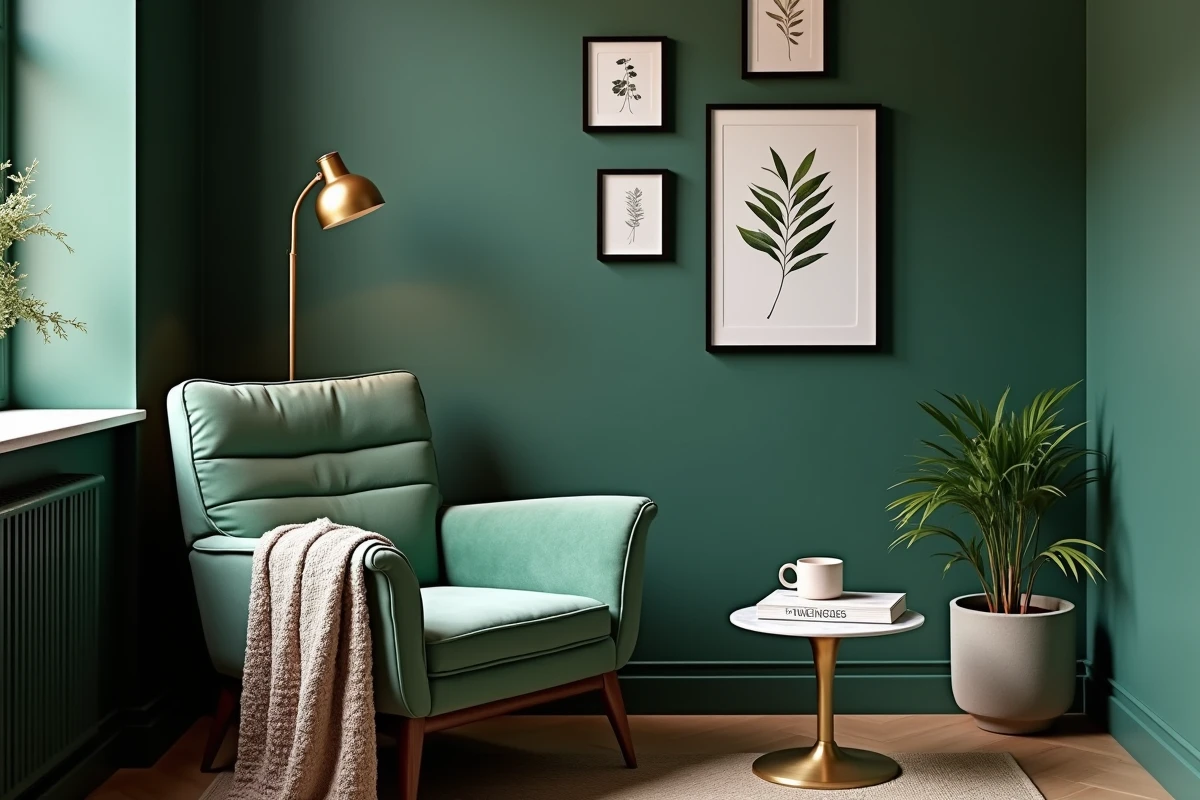
The principle to remember: multiply sources by varying their height and color temperature. A reading lamp at 2,700 K near an armchair, an indirect LED strip at 3,000 K under a shelf, a pendant light at 2,500 K above the table. Each light point carves out a micro-space in the room and creates a depth that furniture alone cannot produce.
Common mistakes with lighting in renovations
- Installing recessed lights in a regular grid on the ceiling, resulting in a commercial look unsuitable for a living room or bedroom
- Neglecting the color rendering index (CRI): below 80, wall and textile hues appear dull, even with a well-chosen color
- Forgetting natural light in the calculation, as an overly opaque curtain can negate the effect of a complete paint renovation
Before repainting a wall, we recommend testing the color under the actual lighting of the room at three different times of the day. A warm gray can turn mauve under a blue-dominant bulb.
Decluttering and circulation in the interior space
Research in environmental psychology confirms what interior designers have long applied: reducing visual clutter decreases the stress felt in domestic space. The effect is measurable even with simple interventions like sorting, reorganizing, or limiting displayed objects.
Decluttering does not mean imposing a minimalist style. It is about prioritizing what remains visible. A sideboard with five spaced objects creates a decorative effect. The same sideboard with fifteen objects produces visual noise.
Concrete method for decorative rotation
Rather than throwing away or permanently storing items, we practice seasonal rotation. Two labeled boxes, one for each semester. Decorative items that are not used for six months move to the next box. If they do not come out in the next cycle, they are donated or sold.
Interest in DIY decor and upcycling is significantly growing among 25-44 year-olds, who prefer to transform their items themselves rather than buy new. This reflex aligns with the decluttering logic: we keep less but personalize more.
Colors and modern style: going beyond the annual trend
Each year, paint manufacturers announce a flagship color. Following this directive to the letter risks creating a dated interior in two seasons. An accent wall remains relevant as long as a compatible shade with the permanent background is chosen.
The rule of three colors remains reliable:
- A dominant shade (walls, floor) covering about two-thirds of visible surfaces
- A secondary shade (main furniture, curtains) occupying the remaining third
- An accent shade (cushions, vases, frames) limited to a few points of contact, easily replaceable
This division allows for following a trend through the accent shade without engaging in heavy renovation work. Changing four cushion covers and a vase costs a fraction of a complete paint job and produces an immediate renewal effect.
Matte finishes are making a strong comeback on walls, while satin finishes remain in humid areas for maintenance reasons. The choice of finish alters the perception of a color as much as the color itself: a matte sage green will appear more muted and deeper than the same green in satin.
Transforming an interior without tearing everything down relies on three technical levers: material coherence, layering of lighting, and the discipline of decluttering. The rest, including the choice of trendy colors, is merely surface dressing, easily evolved from season to season if the foundations are solid.