
When discovering a pregnancy, the first thought rarely concerns the nursery or the stroller. One thinks about scheduling medical appointments, sending paperwork to the CAF, and negotiating leave with the employer. Pregnancy planning begins with these concrete decisions, those that condition what comes next and that one regrets having postponed.
Additional birth leave: a parental calendar to set early
An additional birth leave has been introduced to complement maternity, paternity, and adoption leave. Each parent can take up to two months, split into one or two periods of one month, within the nine months following the birth. Both parents can take it simultaneously or alternately.
The employer must receive the request at least one month before the desired departure. A prerequisite: having exhausted the entirety of their maternity, paternity, or adoption leave. For job seekers, it is France Travail that manages the procedure, via a dedicated reporting system.
These leave periods can be scheduled in relation to the expected due date and the professional constraints of each parent on babysteps-planner.com. Visualizing the sequencing of leaves helps avoid unintentional overlaps and gaps in childcare.
This calendar aspect conditions parental presence during the first weeks of the infant’s life. Neglecting it risks leaving one without childcare coverage at a time when both parents could have been available.

Prevention of cytomegalovirus during pregnancy
When expecting a child and having a young toddler at home, cytomegalovirus (CMV) becomes a tangible risk. The virus circulates in the saliva and urine of young children, often without visible symptoms in them. A CMV infection early in pregnancy can affect the fetus.
The preventive measures recommended by the Ministry of Health are simple but require daily diligence:
- Wash hands after each diaper change, nose wiping, or contact with a child’s saliva
- Do not share utensils, glasses, or toothbrushes with a young child
- Avoid kissing a child on the lips or tasting their milk bottle
- Limit direct contact with tears and mucus, especially in group settings
These hygiene reflexes do not replace medical follow-up, but they significantly reduce exposure. It is a health angle to integrate from the first trimester of pregnancy.
Exemption from medical deductibles: what changes in the sixth month
From the first day of the sixth month of pregnancy until the twelfth day after childbirth, expectant mothers benefit from a exemption from medical deductibles and flat-rate contributions. Consultations, examinations, medications related to pregnancy: everything is covered with no out-of-pocket expenses.
This transition does not always trigger automatically. It is necessary to ensure that the pregnancy declaration has been properly submitted to Social Security and that the recorded start date of the pregnancy is correct. A few days’ difference can delay the start of the exemption.
Administrative steps from the first trimester
Declaring the pregnancy to the CAF and Social Security before the fourteenth week grants access to coverage starting from the sixth month and to the birth grant. Delaying this declaration complicates all subsequent administrative processes.
It is recommended to note the deadlines on a shared calendar between both parents. The maternity hospital should be chosen and reserved as early as the first trimester: in certain geographical areas, spots fill up quickly, and feedback on this varies by region.
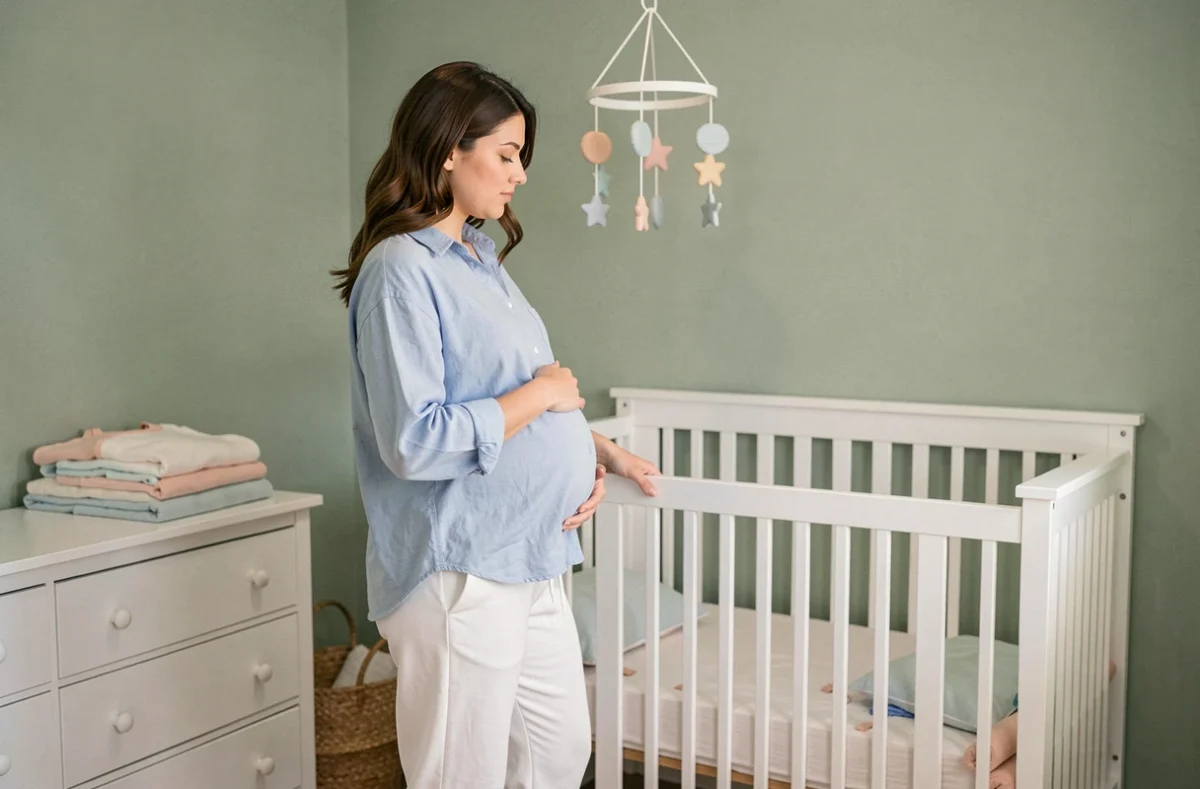
Infant equipment: separating the essentials from what can wait
The baby registries offered by stores often include several dozen items. Buying everything at once increases financial burden and clutters a home that has not yet been reorganized. Differentiating necessary items from those that can be postponed reduces pressure.
The essentials for the first weeks can be summarized in a few categories: a safe sleeping arrangement, seasonally appropriate clothing, bath and changing necessities, and items for feeding the baby (breastfeeding equipment or bottles depending on the parents’ choice).
What can be purchased after birth without risk
The baby bouncer, play mat, high chair: none of these items are needed for several weeks, sometimes several months. Buying them after birth allows for targeting the actual daily needs with the infant rather than following a theoretical list.
Newborn-sized clothing poses a common trap. Many babies do not wear them for more than a week. Planning for more one-month-sized clothing than newborn avoids unused stock.
Separating purchases into two phases, the essentials before maternity and the rest afterward, lightens the mental load during a period already dense with medical appointments, administrative tasks, and lifestyle adjustments.