A cucumber with a localized soft spot does not fall under the same diagnosis as a uniformly limp cucumber. The distinction between post-harvest physiological degradation and fungal or bacterial contamination determines the decision to consume or discard. Here, we detail the technical criteria that allow for a clear decision, including for recent varieties whose storage behavior differs from classic types.
Internal rot of cucumbers: the trap of recent hybrid varieties
The disease-resistant hybrid varieties introduced to the European market since 2024 pose a specific problem. Their thicker skin and increased resistance to surface pathogens mask a reality: internal rot can develop without any visible external signs.
This phenomenon particularly affects greenhouse crops with poorly regulated humidity. The cucumber appears firm, its skin remains smooth and green, but the internal flesh degrades. To identify this alteration, we recommend a simple sensory test: slice the cucumber in half lengthwise and observe the central area around the seeds.
A translucent or glassy flesh around the seeds, even without a marked odor, indicates the beginning of internal decomposition. This signal goes unnoticed if one relies solely on the texture of the skin. Amateur gardeners growing in organic greenhouses report an increase in these cases, linked to excess moisture that the variety’s external resistance does not compensate for.
Knowing how to identify when a cucumber is no longer good thus requires adapting one’s reflexes to the characteristics of the purchased variety. A snack-type cucumber with thin skin deteriorates differently than a long Dutch cucumber with thick skin.
Home sensory tests to evaluate a suspicious cucumber
The visual approach alone is no longer sufficient. We use three complementary tests that cover surface alterations as well as deep degradations.
- Localized pressure test: press with your thumb on three areas (peduncular end, center, floral end). A healthy cucumber offers uniform resistance. An area that sinks without bouncing back signals advanced cell lysis, even if the rest appears firm.
- Olfactory test by cutting: slice a disc from each end. A sour or fermented smell, even slight, betrays bacterial proliferation. The absence of a fresh, vegetal odor is already a negative signal.
- Visual seed test: open the cucumber lengthwise. Brown, soft seeds or seeds surrounded by a watery halo indicate that maturity has been significantly exceeded. Seeds that are still white and firm confirm an acceptable state of freshness.
- Skin knife test: run the blade flat over the surface. A fresh cucumber offers slight waxy resistance. If the skin sticks or a slimy film appears, surface bacterial degradation is underway.
These tests take less than a minute and allow you to distinguish a cucumber that is simply softened by dehydration (still consumable in soup or gazpacho) from a cucumber that is truly altered and should be discarded.
Mini cucumbers and long cucumbers: different shelf lives
Snack or mini cucumbers, very popular in large retail, have a shorter shelf life than standard varieties. Their thin skin accelerates water loss and facilitates the penetration of mold.
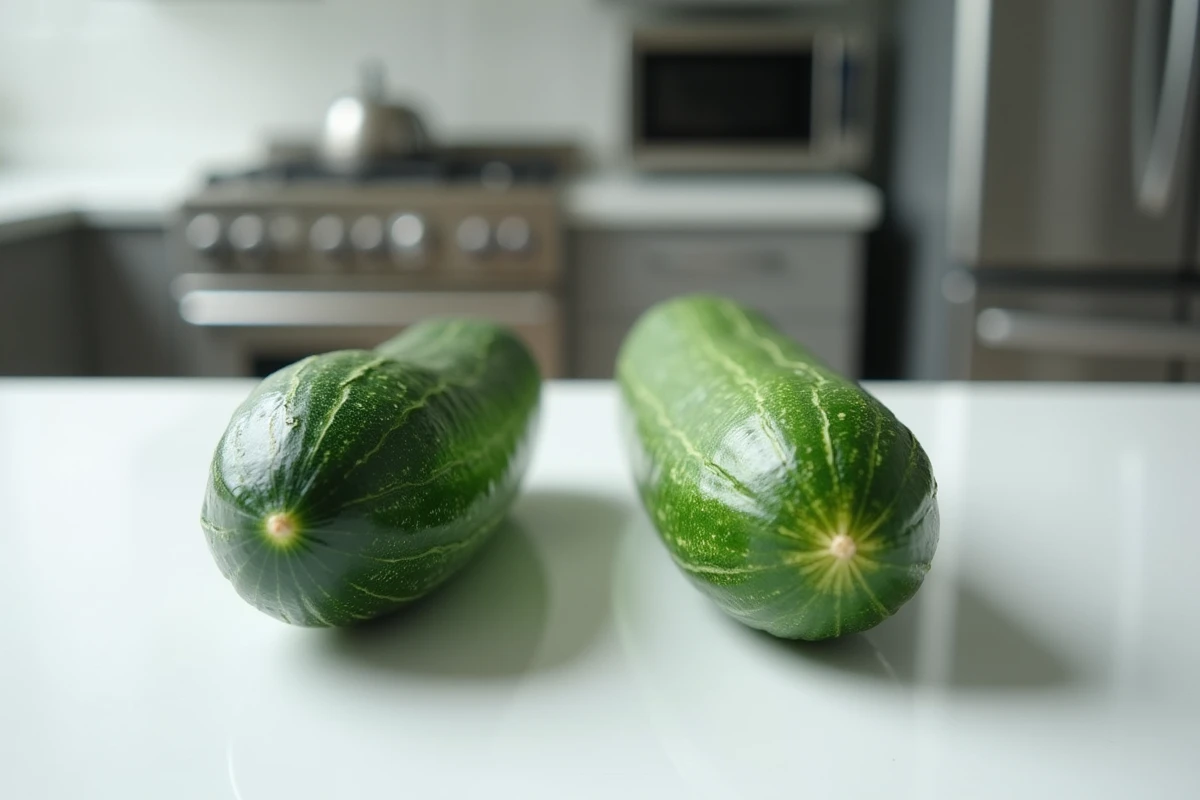
In practice, a long cucumber wrapped in plastic film stored between 10 and 12 °C remains usable significantly longer than a mini cucumber stored under the same conditions. Removing the plastic film accelerates dehydration, but keeping it on promotes condensation and therefore mold. The compromise: poke two or three holes in the film to allow air circulation without exposing the entire surface.
For mini cucumbers sold in trays, we observe that the first signs of degradation often appear at the bottom of the tray, where moisture stagnates. Flipping the tray and inspecting the cucumbers underneath before consuming those on top avoids unpleasant surprises.
Yellowing of the cucumber: ripeness or degradation
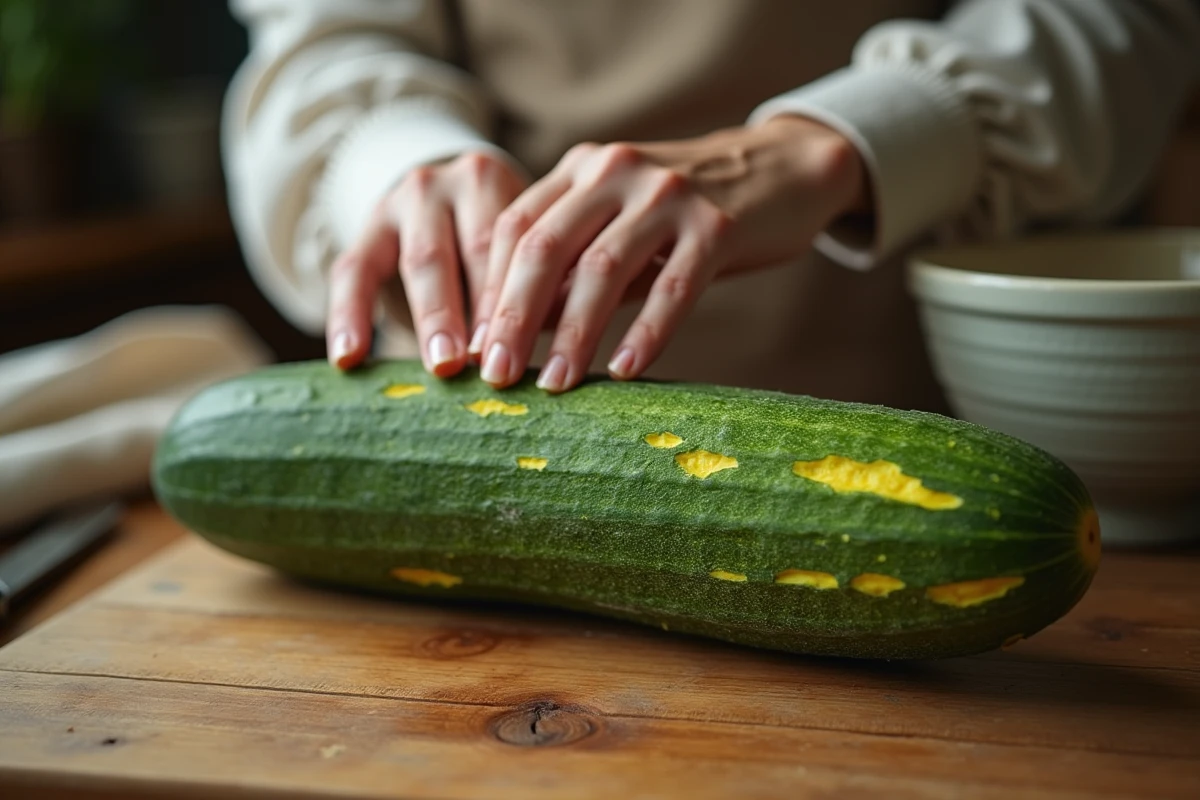
A cucumber that turns yellow is not automatically unfit for consumption. Yellowing corresponds to advanced ripening: the seeds harden, the flesh loses crunchiness, and bitterness may appear. This cucumber remains technically edible, but its texture and flavor make it unsuitable for raw consumption in salads.
The problematic yellowing is that which is accompanied by brown spots, white or gray mold, or localized softening. A yellow but firm cucumber can be cooked without health risks, for example in a soup or pickles. A yellow and soft cucumber with dark spots should be discarded.
Real health risks associated with contaminated cucumbers
The recent trend of cucumber recalls for Salmonella contamination, particularly related to imports, reminds us that risks are not limited to visible mold. Bacterial contamination does not always change the appearance of the vegetable.

The classic signs of spoilage (soft texture, odor, mold) detect fungal alterations and internal degradations. However, they do not allow for the identification of contamination by pathogens such as Salmonella or E. coli, which can be present on a cucumber that appears perfect.
The European regulatory evolution in 2025, with stricter thresholds for pesticide residues, has reduced the use of certain fungicides. Direct consequence: visual signs of fungal degradation appear more quickly than before on untreated cucumbers or those treated with less persistent alternatives. What once looked like a minor cosmetic defect a few years ago can now signal a more advanced alteration.
To reduce bacterial risks, washing under running water while scrubbing the skin remains the most effective measure. Peeling removes most surface contaminants but also takes away fibers and some of the nutrients concentrated just under the skin.
A cucumber whose appearance, odor, and texture pass the sensory tests described above can be consumed with reasonable confidence. One that fails any of these tests, especially the olfactory test by cutting, does not deserve the benefit of the doubt.