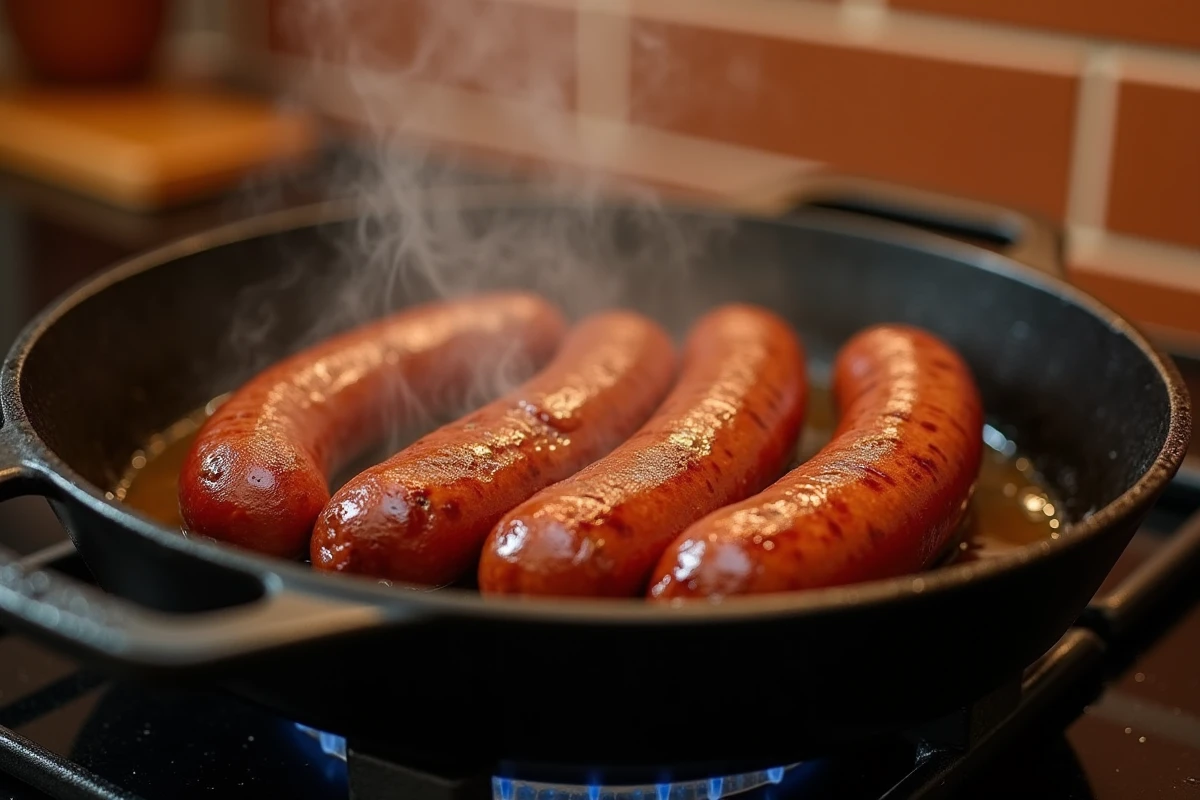
The merguez loses a large part of its juice as soon as the casing bursts or the heat rises too quickly. This sausage made from lamb, beef, or a mixture of both reacts poorly to sudden high temperatures. Reheating already cooked merguez poses the same problem: the meat, already dehydrated from the first cooking, dries out even more quickly during the second heating.
Why merguez bursts and dries out in the pan
The natural or collagen casing surrounding the merguez contracts under the effect of heat. If the temperature rises abruptly, the internal pressure increases faster than the casing can expand. The result: it cracks, the fat melts and escapes, and the meat is left directly exposed to the scorching surface of the pan.
This phenomenon also explains the oil splatters that many fear. The released fat comes into contact with the bottom of the pan, causing micro-splashes. The more fat the merguez loses, the drier and more fibrous it becomes in the mouth.
For those who want to reheat or cook merguez in the pan properly, the logic is always the same: limit thermal shock and keep the fat inside the casing.
Cooking merguez in the pan: starting cold
The most reliable technique to prevent bursting is to place the merguez in a cold pan, without adding any fat. The sausages contain enough lipids to ensure their own cooking. Adding oil creates an unnecessary fat bath that accelerates splatters without improving the taste.
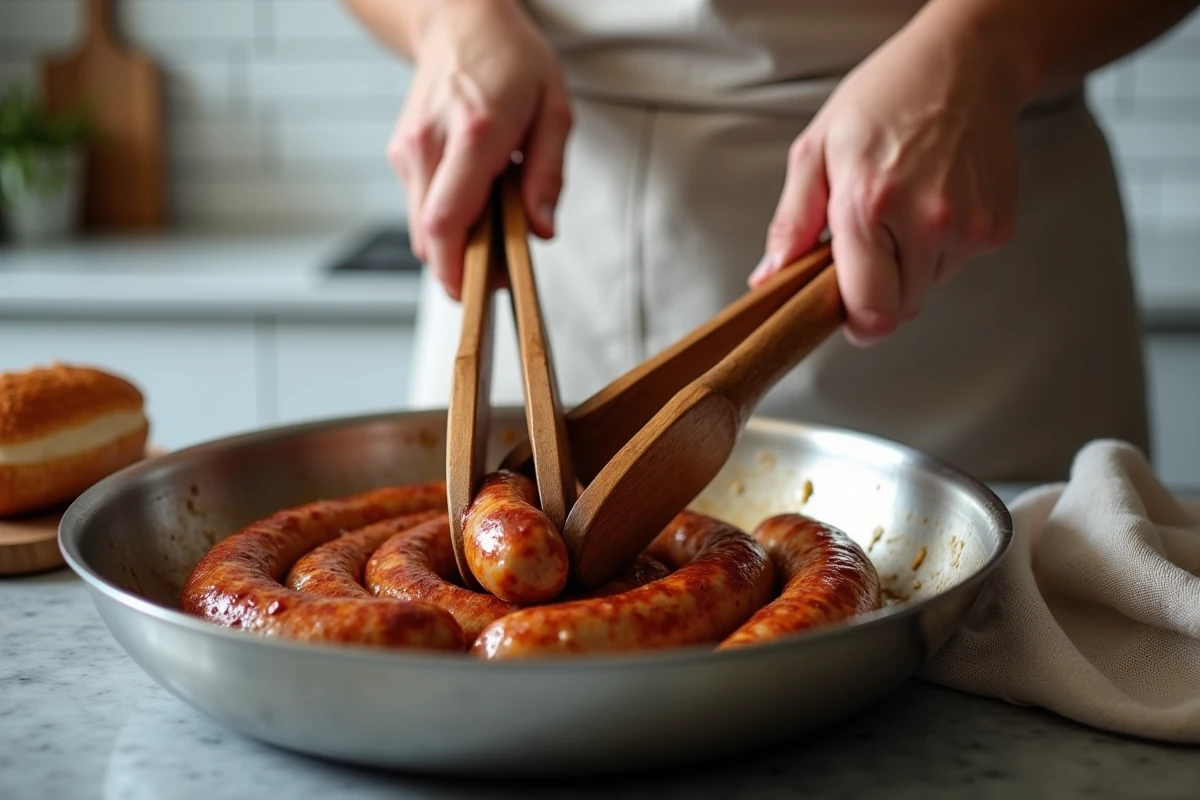
The method with a water base
Pouring a little water into the pan before turning on the heat creates a gentle steaming cooking phase. The water keeps the temperature below the point where the casing starts to contract violently. As the water evaporates, the pan gradually heats up and the merguez begins to brown without experiencing shock.
The water should just cover the base of the sausages, not immerse them. Once the water has evaporated, they should be turned regularly over moderate heat to achieve an even color.
Never pierce the merguez
Piercing the merguez with a fork is the gesture that causes the most damage. Each hole becomes a point of escape for the juice and fat. A pierced merguez before cooking loses most of its tenderness. The temptation often comes from the fear of swelling, but a gentle heat solves this problem without sacrificing texture.
- Place the merguez in the cold pan, without oil or butter.
- Add a little water covering the base of the sausages, then turn on to medium heat.
- Let the water evaporate without covering, then lower the heat to brown the merguez, turning them every two to three minutes.
- Do not pierce the casing, even if the sausage swells slightly.
Reheating already cooked merguez without drying them out
Reheating a merguez cooked the day before is more delicate than cooking it for the first time. The meat has already lost some of its water and fat. The microwave is the worst option for reheating merguez: it heats unevenly and turns the casing into a rubbery texture.
The covered pan on very low heat
Placing the merguez in a pan with a splash of water or broth, covering it, and heating on very low heat works like an improvised double boiler. The steam trapped under the lid slightly rehydrates the surface of the sausage while the center warms up. A few minutes are sufficient.
Removing the lid at the end of reheating allows for a bit of crispness on the casing. One to two minutes on medium heat, turning once, gives a slight color without compromising the internal tenderness.
The oven as an alternative
The oven set to low temperature is another option for reheating several merguez at the same time. Wrapping the sausages in aluminum foil with a spoonful of broth or water retains moisture during the heating process. A too-hot oven produces the same result as a too-hot pan: the casing shrinks and the meat hardens.
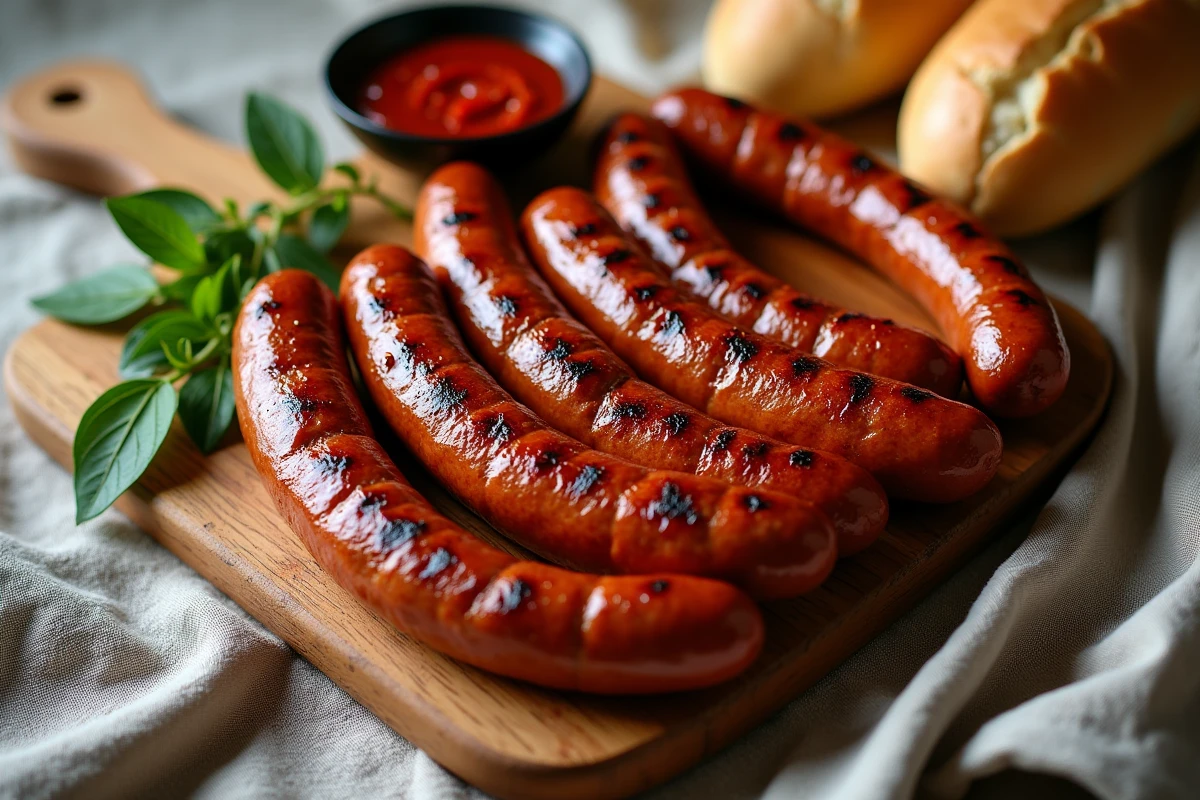
Merguez in the pan or on the barbecue: how the cooking method changes
The charcoal barbecue exposes the merguez to intense and uneven radiant heat. The areas closest to the coals can exceed temperatures much higher than what a pan produces. The surface of the sausage caramelizes quickly, giving a desirable smoky flavor, but the risk of drying out increases.
The pan offers finer temperature control. Low heat and frequent turning are easier to manage on a stovetop. To achieve a barbecue-like result in the pan, some cooks use a thick cast iron pan that retains heat and distributes it evenly.
However, the pan does not replicate the combustion aromas of charcoal. The final taste remains different, even if the texture of the meat can be better preserved.
- Barbecue: quick cooking, smoky flavor, high risk of bursting if the merguez are placed too close to the coals.
- Pan: controlled cooking, more consistent result, moister texture provided the gradual temperature increase is respected.
- Oven: ideal reheating for large quantities, at low temperature and in foil to retain moisture.
The quality of the merguez itself plays a crucial role. An artisanal merguez with a sufficient fat content is more forgiving of cooking errors than a very lean industrial version. Fat is not a flaw in a sausage: it is the main carrier of flavor and tenderness. Choosing merguez from a butcher who works with a balanced mix of meat and fat greatly simplifies cooking, regardless of the chosen method.