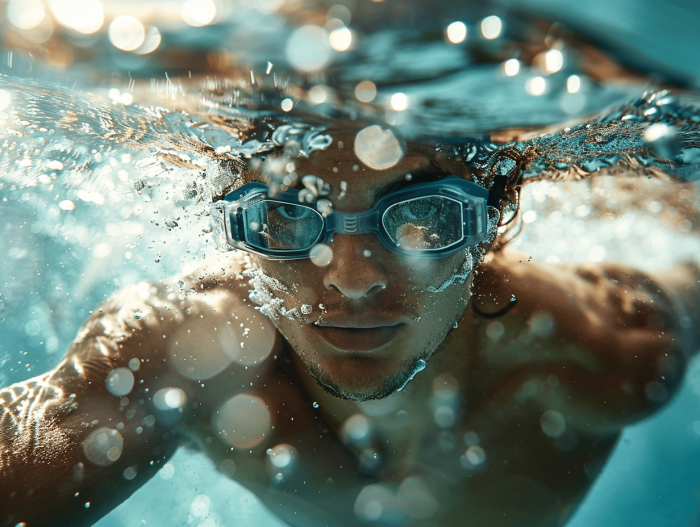
Human athletic performance, particularly in swimming, is often put into perspective against the abilities of other animals. Humans, thanks to technology and training, have managed to achieve impressive speeds in the water. When compared to natural swimmers like fish or marine mammals, the gap remains significant.
Dolphins, for example, can reach speeds of 60 km/h, far exceeding the maximum of 8 km/h for an Olympic swimmer. These comparisons not only allow us to appreciate human feats but also to understand the biological limits and specific adaptations of different species.
Human Athletic Abilities in Swimming: A Comparative Analysis
Swimming is distinguished by the multiple styles and the muscles engaged. In butterfly, the shoulders, back, chest, abs, and thighs are heavily utilized. This style requires considerable coordination and muscular strength.
The Different Swimming Styles and Their Muscle Engagement
- Butterfly: engages the shoulders, back, chest, abs, and thighs.
- Freestyle: engages the shoulders, back, abs, and legs.
- Breaststroke: engages the thighs, chest, shoulders, and arms.
- Backstroke: engages the back, shoulders, and abs.
The human swimming speed varies according to style and training level. In competitive swimming, men and women show notable differences. Ira Hammerman, an expert in the field, compared the performances of both sexes. On average, men outperform women in terms of speed, particularly in freestyle and butterfly.
Comparison of Average Speeds
| Swimming Style | Men | Women |
|---|---|---|
| Freestyle | 4.71 km/h | 4.19 km/h |
| Butterfly | 4.00 km/h | 3.40 km/h |
To evaluate performance, the Swolf score (a combination of speed and the number of arm strokes) is often used. This score, published by organizations like Piscine.blue, measures swimming efficiency. The differences in scores between men and women highlight variations in technique and muscular power.
While human swimming speed is remarkable, it remains lower than that of natural aquatic species. These comparisons provide an essential perspective for understanding the limits and potential of human sporting activity.
Comparison with the Performance of Other Aquatic Species
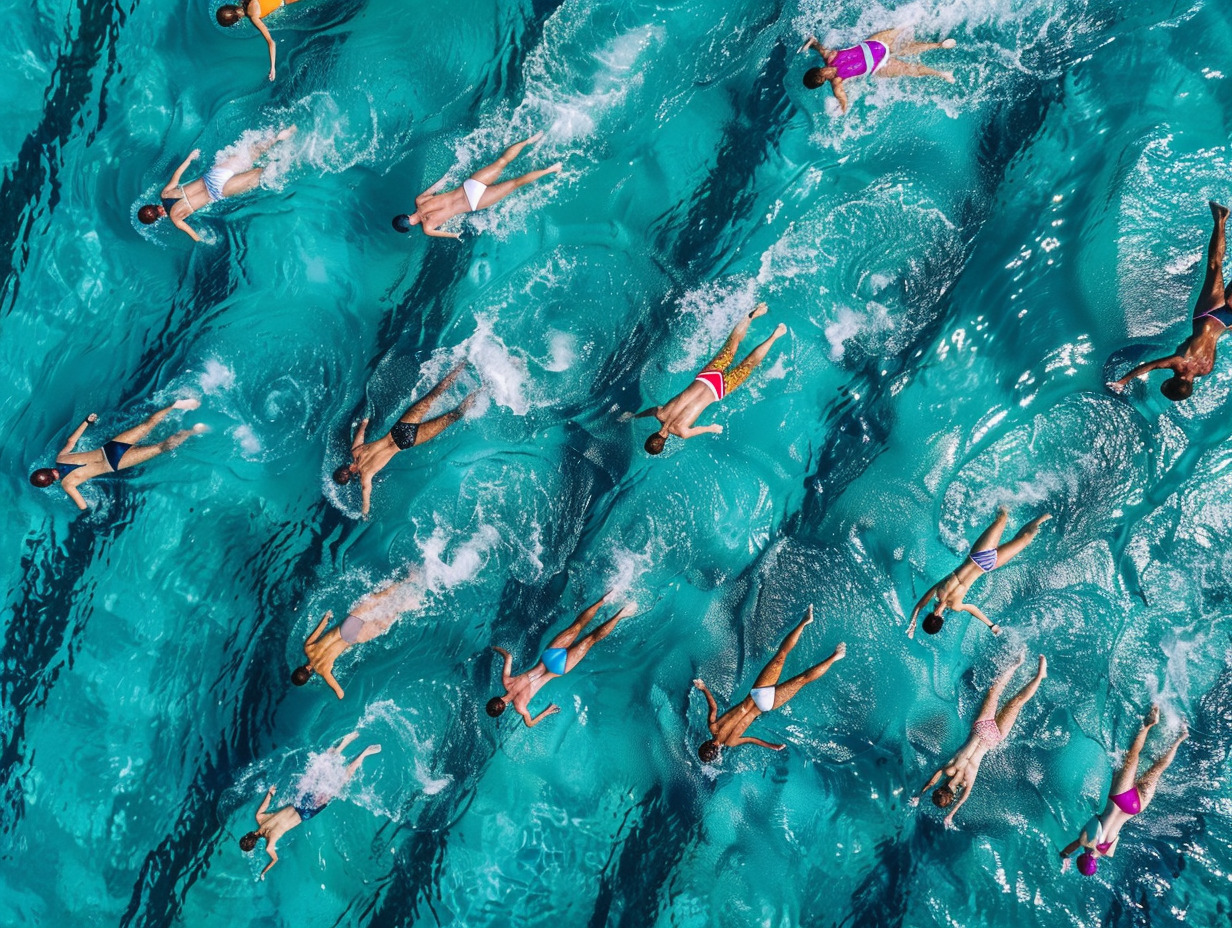
When comparing human swimming to that of other aquatic species, the differences are striking. Take, for example, the dolphin, capable of reaching speeds of 55 km/h thanks to its undulating movements and hydrodynamic shape. This marine mammal uses its powerful back and abdominal muscles to propel its body with unmatched efficiency.
Some Examples of Aquatic Speeds
- Dolphin: up to 55 km/h
- Great White Shark: around 40 km/h
- Swordfish: up to 110 km/h
Unlike humans, fish like the swordfish have anatomy specially adapted for fast swimming. Their streamlined bodies and powerful fins allow them to cut through the water with minimal resistance. The structure of their muscles, particularly the tail muscles, is optimized for rapid and continuous propulsion.
The comparison with the great white shark, a formidable predator, also reveals significant disparities. The shark combines brute strength and agility to reach peak speeds of 40 km/h. Its robust body and powerful jaws not only allow it to swim quickly but also to dominate its aquatic environment.
In contrast, human swimming is limited by the need to coordinate the movements of the arms and legs, as well as by the less hydrodynamic shape of the human body. Human performances remain remarkable in the context of our terrestrial anatomy, but pale in comparison to the natural abilities of the masters of the ocean.