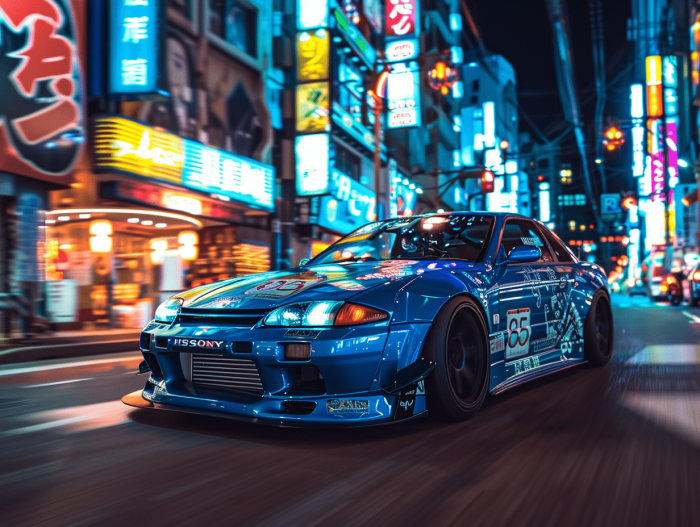
The Fast and Furious saga has made its mark in cinema history with its thrilling car chases and legendary vehicles. Tokyo Drift, the third installment, brought a unique dimension with its immersion in Japanese drift culture.
D. K.’s Nissan 350Z, Han’s Mazda RX-7, and Sean’s Mitsubishi Lancer Evolution have become icons. These vehicles are not just machines; they are characters in their own right, each telling a unique and exciting story. Their presence on screen has captivated speed enthusiasts and car lovers around the world.
The Iconic Cars of Tokyo Drift
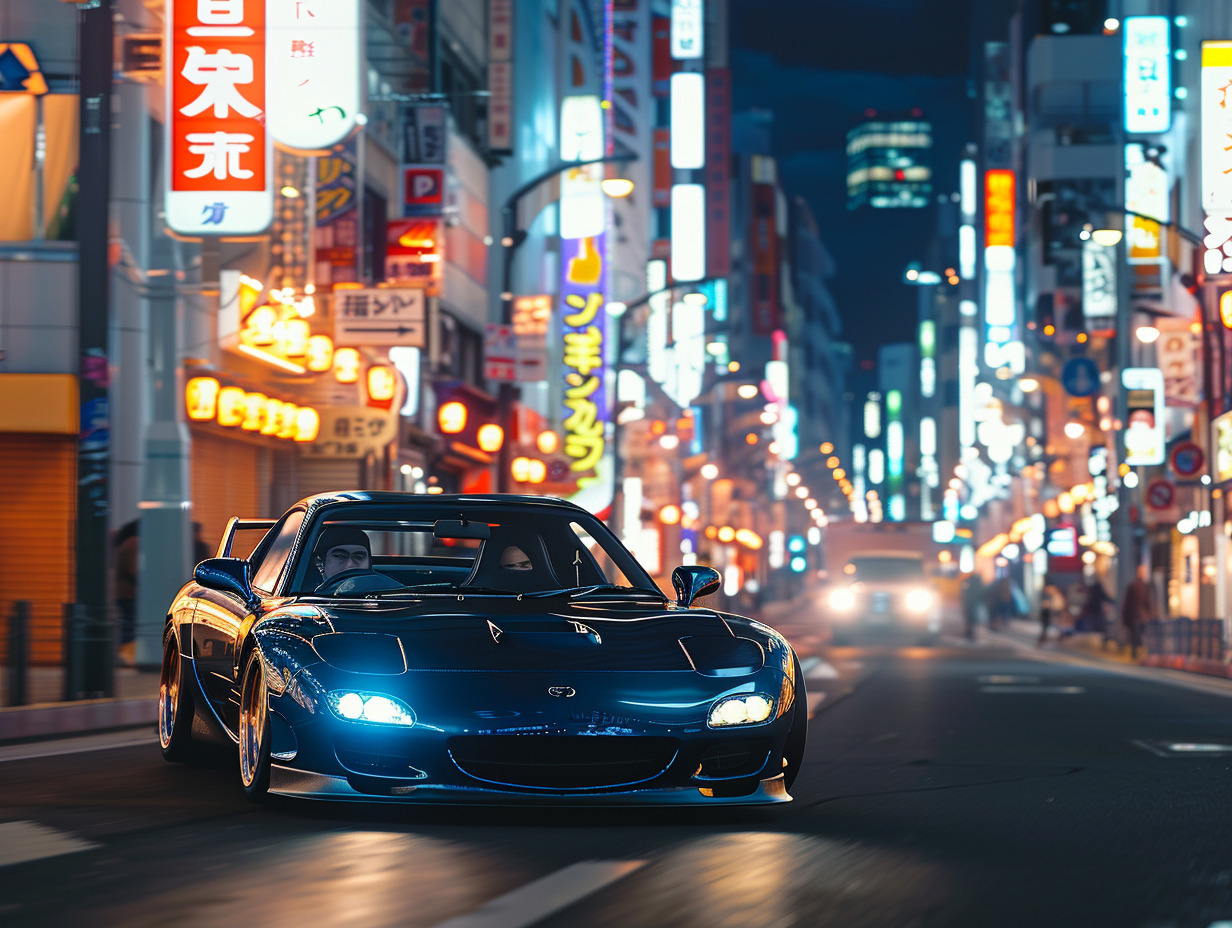
Tokyo Drift, the third episode of the Fast and Furious saga, captivated speed lovers with legendary vehicles. Among the most notable, Han Lue’s Mazda RX-7 remains a symbol of style and power. Created by Mazda in 1978, this car stands out for its unique rotary engine and sleek design. Unfortunately, it was destroyed by Deckard Shaw, adding a tragic note to its story.
The Drift King, or D. K., drives the Nissan Fairlady Z, another gem of Japanese engineering. This Fast and Furious Tokyo Drift car is designed for tight corners and explosive accelerations, perfectly symbolizing the art of drifting.
Sean Boswell, the protagonist, finds himself behind the wheel of the Ford Mustang Fastback, an iconic American model. This vehicle, with its V8 engine, represents a fusion of Japanese and American car culture.
Other Notable Vehicles
- Han Lue’s Nissan Silvia S15, a must-have in street racing.
- Neela’s Mazda RX-8, remarkable for its design and performance.
These cars are not just means of transportation; they embody ideals, dreams, and rivalries. They are the true protagonists of Tokyo Drift, making every race memorable and every turn a challenge.
The Impact of Tokyo Drift on Car Culture
Tokyo Drift represented much more than mere entertainment. Indeed, it profoundly influenced global car culture. The Fast and Furious saga, with its 9 films, 2 short films, and 1 animated series, has generated 4 billion dollars in revenue, with Tokyo Drift playing a key role.
The numbers speak for themselves: 1500 vehicles were destroyed during filming, resulting in estimated damages of 500 million dollars. Among these destructions, Jason Statham alone caused 215 million dollars in damages.
| Element | Figures |
|---|---|
| Films | 9 |
| Short films | 2 |
| Animated series | 1 |
| Revenue | 4 billion dollars |
| Destroyed vehicles | 1500 |
| Total damages | 500 million dollars |
| Damages caused by Jason Statham | 215 million dollars |
The cultural impact is undeniable. Tokyo Drift popularized drifting, a driving technique that has become essential. Characters like Dominic Toretto and Paul Walker helped create a legend around this practice. The film also played a role in the rise of Japanese cars on the international stage, with models like the Nissan Skyline and the Mazda RX-7.
Influence on the Automotive Market
The success of Tokyo Drift had direct repercussions on the automotive market. Sales of certain models skyrocketed, and tuning enthusiasts found a new source of inspiration. The film also promoted the rise of drift competitions, attracting an increasingly large and passionate audience.
Tokyo Drift thus marked the history of cinema and car culture, leaving an indelible mark on the minds and roads of the world.