Denatured alcohol can attack certain varnishes while preserving other finishes, whereas household alcohol sometimes leaves unexpected marks on waxed woods. The manufacturers themselves recommend different concentrations depending on the wood species or treatments applied.
There are alternatives that are often less aggressive, but their effectiveness varies depending on the condition of the wood and the nature of the stains to be removed. The risks of damage persist if the preparation of the surface or the application does not follow specific steps. Comparing the different types of alcohols and their uses is essential to avoid unpleasant surprises and preserve the integrity of the wood.
Which alcohols to choose for cleaning wood safely: understanding the differences and their uses
Denatured alcohol and household alcohol are often confused, yet the difference goes far beyond mere terminology. Denatured alcohol, known for its ability to clean, disinfect, and degrease effectively, is used to freshen up wood while slightly lightening it. On an untreated surface, it dissolves greasy stains, helps prepare the surface before applying a finish, and even neutralizes oxalic acid after a lightening treatment. But beware: on resinous woods like fir, the attack is often too strong, leading to damaged fibers or an unexpected color shift.
Household alcohol, on the other hand, generally contains additives and methanol. It is more versatile, but it is precisely this versatility that complicates matters: the composition varies and can compromise the appearance of certain varnishes or waxes. Before applying it to an antique piece of furniture or treated flooring, it is best to test it on a discreet area, out of sight. And do not neglect to ventilate the room: denatured alcohol releases vapors that should not be taken lightly.
Other products sometimes mentioned for wood maintenance deserve careful consideration. Bleach, effective for lightening resinous woods, requires strict adherence to safety instructions. Oxalic acid, or sorrel salt, revitalizes oak, provided it is rinsed thoroughly afterward. As for hydrogen peroxide mixed with ammonia, it can lighten dark wood but should be avoided on resinous types.
Before using denatured alcohol on wood, consult the file “Ideal Alcohol for Wood Cleaning: Selection and Advice – French Home” to make an informed choice of product based on the surface and the desired effect. The reactions of wood vary significantly depending on the species, finish, and maintenance history.
Preparing and applying denatured alcohol on wood: key steps for effective and safe cleaning
Before starting, ensure the type of wood and its prior treatment. On a waxed piece of furniture or a protected floor, a test on a hidden area is essential to prevent any unpleasant surprises. Raw or simply sanded wood reacts more vigorously, which requires increased vigilance with soft or resinous species. Ventilate, wear gloves, and avoid prolonged contact with the skin.
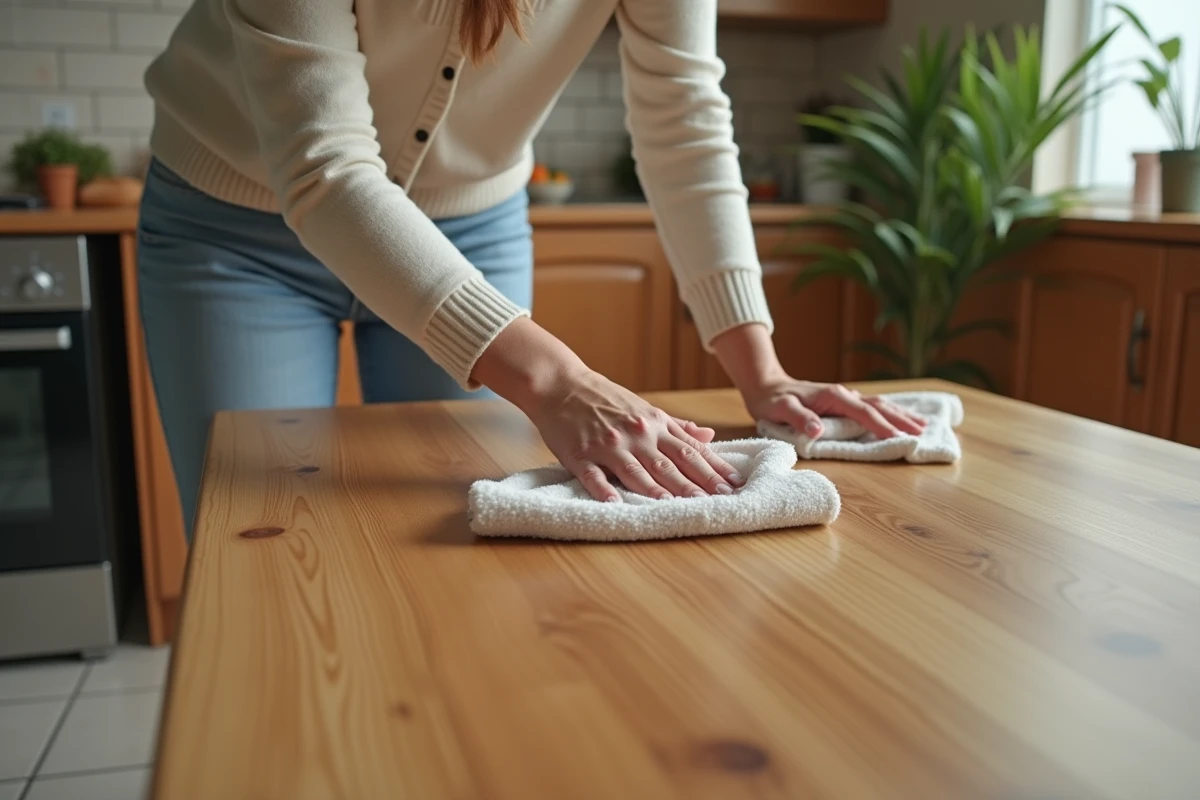
Before applying the alcohol, the surface must be perfectly clean. This involves dusting it thoroughly; if there are any wax residues, a bit of talc can help absorb them. For effective application, soak a clean sponge with a few tablespoons of denatured alcohol. Gently wipe the wood without pressing too hard, following the grain: this action allows you to clean and degrease without risking altering the color. On stubborn stains or dull areas, proceed with small touches, avoiding vigorous rubbing.
It is then recommended to rinse immediately with clear water, or slightly vinegar-infused water, to remove any residue. Dry immediately with a soft cloth: wood does not appreciate prolonged moisture. If the wood has been treated with oxalic acid, denatured alcohol acts as a neutralizer, limiting the return of tannins. Finally, to maintain the renovated appearance, apply a protective layer, wax, oil, or varnish, to enhance the shine and durability of the wood.
Gentle alternatives and comparison: when to prefer other methods for maintaining your wooden surfaces
When it comes to fragile or antique surfaces, it is better to opt for natural methods to avoid any adverse reactions. Here are some gentle solutions that are both effective and respectful of the wood:
- Diluted white vinegar: cleans without altering the fibers and preserves the original color.
- Black soap: ideal for regular maintenance, it removes impurities from the surface without harming the material.
- Baking soda: perfect for dislodging ingrained dirt on raw or lightly treated wood while slightly reviving the color.
To treat superficial stains or give a slight shine, other solutions are worth trying. Lemon juice mixed with salt works gently, while Marseille soap proves valuable on painted wood. Tea infusion, on the other hand, restores shine to varnished woodwork. These alternatives limit the use of solvents while ensuring a satisfactory level of hygiene.
| Method | Action | Specifics |
|---|---|---|
| Baking soda | Clears, lightens | Raw or lightly treated wood |
| Black soap | Degreases, cleans | Regular maintenance |
| White vinegar | Stains, deodorizes | Untreated wood |
| Lemon juice + salt | Lightens the surface | Localized action |
Stronger treatments, such as oxalic acid or hydrogen peroxide, are only justified on very dark or particularly dirty woods. Before using them, it is always best to test on a hidden corner. Each species, oak, fir, spruce, reacts in its own way, depending on its density and previous treatments. It is the informed choices, adapted to the nature and condition of the wood, that ensure the longevity and beauty of your surfaces. Everyone should invent their own gestures to maintain wood without ever betraying it.