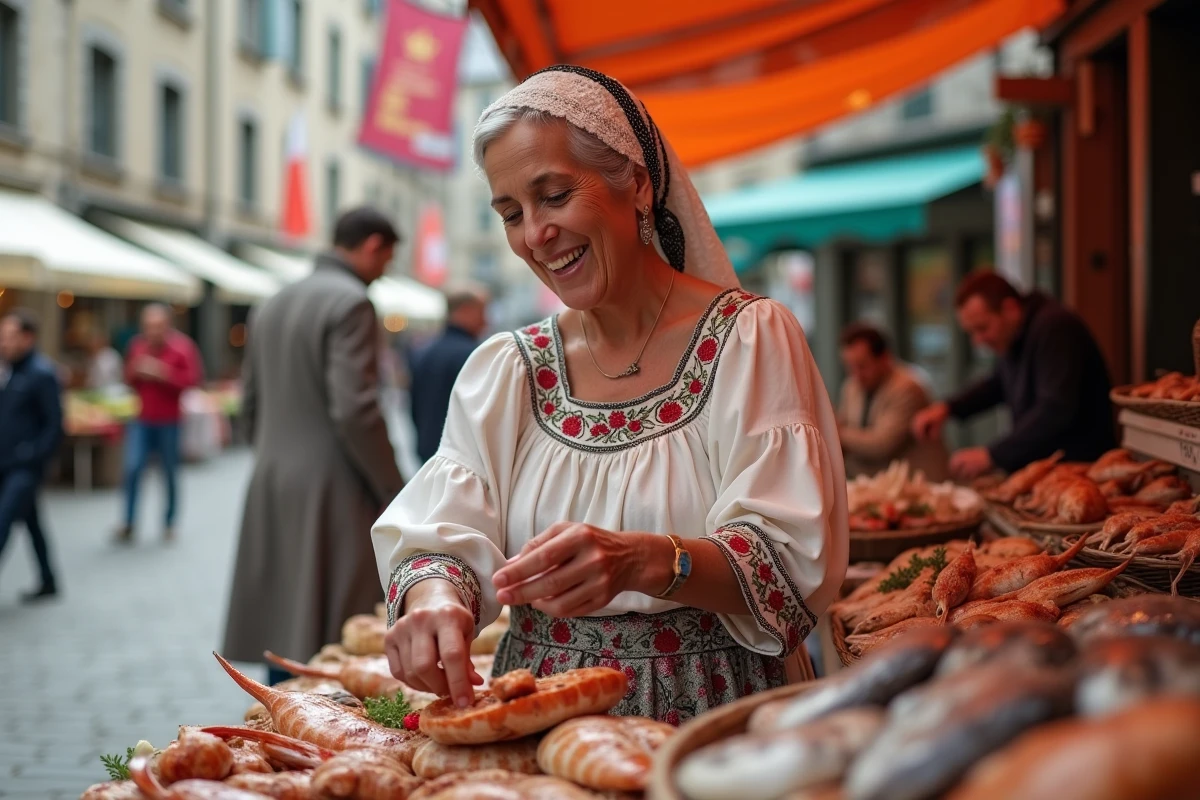
In Rennes, Breton and Gallo coexist in public spaces despite a long-centralized language policy. Celtic festivals are seeing an increase in attendance, while public funding for small cultural organizations remains unstable.
In Côtes-d’Armor, artistic creation attracts young graduates, while traditional festivities struggle to renew their volunteers. Private initiatives are multiplying events, without always finding the expected institutional support.
Brittany Today: What Makes the Region Thrive
In Brittany, it is the residents who set the tone. Regional attachment is not limited to an ancient history: it is felt in the streets, in schools, at markets, and in the vitality of a cultural heritage that refuses to be shelved in the past. Between Quimper and Saint-Malo, Upper Brittany and Lower Brittany observe, respond to, and enrich each other. This diversity is reflected in stories, habits, and even in the urban landscape where bilingual signage is expanding, proof of a language that stands its ground and identities that assert themselves.
The intangible heritage recognized by UNESCO translates into bilingual schools, immersion daycare centers, but also in these small daily details: a sign in Breton at the entrance of a village, a street name in Gallo, or the programming of a fest-noz in a community hall. In the countryside of Ille-et-Vilaine as well as along the coasts of Finistère, the passing of the torch is organized: language courses, restoration of a calvary, or orchestration of a local festival. Recently renewed elected officials show their support for associations, even if public finances sometimes impose difficult choices. Debates on local rights, coastal management, or the future of heritage energize regional democratic life.
To follow these developments, Bretagne Info offers a solid anchor point: news on local projects, reports on municipal elections, and files on coastal management or environmental policies. Bretons, whether they grew up here or chose the region, remain strongly attached to solidarity, respect for the environment, and conviviality. Brittany moves forward, driven by this collective energy, balancing loyalty to its roots and a desire for openness.
What Events and Festivals Are Currently Shaping Breton Life?
On the roads of Finistère and in the lively streets of Rennes, the calendar is always full. Festivals, cultural events, popular dances: local life pulses to the rhythm of a dense program, where Celtic music intersects with sounds from around the world. It is impossible to miss the Interceltic Festival in Lorient: every summer, the city becomes a playground for musicians from Ireland, Scotland, Galicia, or Wales. The turnout is such that the terraces overflow, the binious can be heard as far as the port, and the crowd shares, without restraint, this collective momentum.
In Saint-Malo, the Route du Rock attracts a generation eager for musical discoveries, where headliners and emerging artists coexist. Classical music lovers find their joy with the Banquet Céleste and the Escales Baroques, supported by DRAC Bretagne. And then there are the fest-noz, which transform the Crozon peninsula into a dance floor, and the competitions of the championship of bagadoù, where fervor is evident in every breath of the bombarde.
Here are some events that unite and energize the region:
- The Festival des Vieilles Charrues in Carhaix brings together artists from around the world every summer, not forgetting the local scene that remains at the heart of the event.
- The celebrations of Saint Patrick transform the city centers of Brest and Saint-Brieuc into open-air party spaces, where people dance, sing, and share a drink late into the night.
- The second round of the municipal elections also enters daily life, mixing civic discussions with local issues.
Debates are also lively on the docks. Fishermen, faced with the rise in diesel prices, are calling on public authorities. Here, celebration coexists with the realities of daily life. Brittany combines cultural events and concrete struggles, maintaining its ability to bounce back, defend its uniqueness, and unite beyond divisions.
Diving into Breton Culture: Celtic Music, Traditions, and Local Encounters
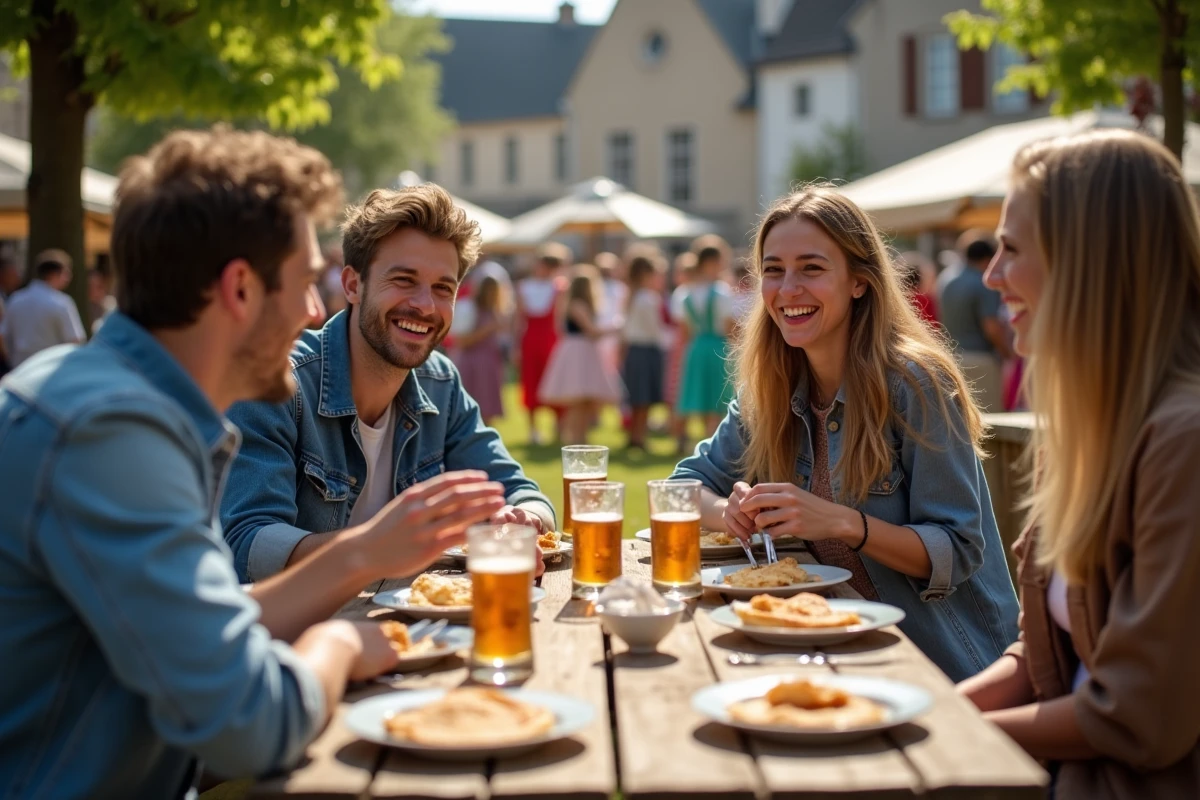
It is impossible to talk about Brittany without mentioning this culture that flows through every village, every community hall, every bistro. Celtic music still thrives here, carried by both the youth and the elders. In some daycare centers, the Breton language resonates from the morning, while in the square of a town, Breton dance brings everyone together for a few turns of gavotte or andro. The bagad Ronsed Mor captivates its audience during the first round of the bagadoù championship, and at night, the sounds of biniou and bombarde still resonate during the fest-noz.
At every gathering, Breton cuisine makes an appearance: a kouign-amann shared on a corner of the table, a buckwheat galette enjoyed on the go, a glass of cider raised to the health of the guests. Celtic legends continue to circulate, sometimes by the fireside, keeping alive an imagination that is rooted in the land and daily life. Solidarity here is expressed in the practice of gouren, this traditional wrestling promoted by the federation, and in the commitment of kenleur collectives that perpetuate the know-how and dances classified as intangible heritage by UNESCO.
Here are some aspects that illustrate the richness and vitality of local culture:
- Traditional singing is passed down during festoù-noz as well as on urban stages, creating bridges between generations.
- Bilingual signage reflects a regional identity that embraces its roots while looking to the future.
- Children become familiar with Breton toponymy, whether at school or while strolling through towns.
Conviviality here is not a cliché. It is lived in respect for the collective and nature. Brittany continues to weave this unique thread, balancing vibrant traditions and open horizons. Tomorrow, on the dock of a port or at the heart of a fest-noz, it will undoubtedly invent new ways to vibrate together.